
Asphalt concrete paves our highways, urban roads, and bridge decks. However, during long-term service, many pavements still face familiar problems:
- Rutting under high summer temperatures
- Cracking in cold winter conditions
- Faster fatigue damage under repeated traffic loads
- Reduced durability due to moisture and water damage
To improve pavement performance and service life, fiber-reinforced asphalt concrete has been increasingly adopted. Among different fiber types, polyester fiber has become a proven and practical solution for road engineering applications.
This article explains how polyester fiber works in asphalt concrete and why it adds real value to pavement performance.
What Does Fiber Do in Asphalt Concrete?
Structurally, asphalt concrete is a composite material made of: Aggregates + asphalt binder
Under temperature changes and repeated traffic loading, microcracks can easily form inside the mixture. Once these cracks develop, they tend to grow and shorten pavement life.
Adding fiber helps in three key ways:
- Reinforcement effect: fibers form a micro-scale supporting network
- Crack bridging: fibers span across microcracks and transfer stress
- Structural stability: fibers improve cohesion and integrity of the mix
Because of these effects, fibers are widely used to improve high-temperature stability, low-temperature crack resistance, and long-term durability of asphalt mixtures.
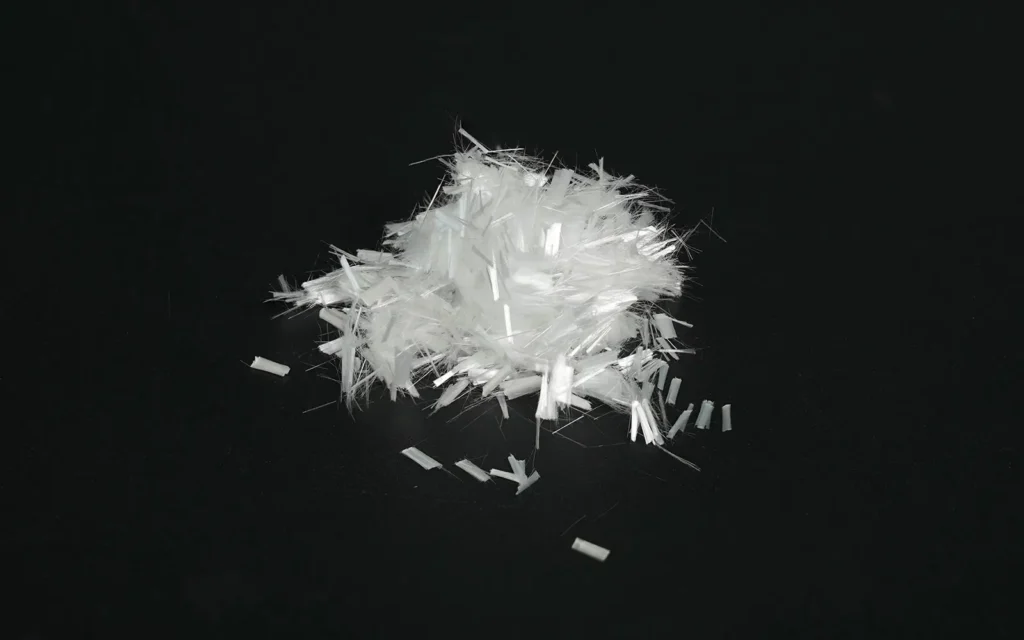
Why Is Polyester Fiber Suitable for Road Engineering?
Not all fibers are suitable for asphalt concrete. Road construction places specific demands on fiber materials.
1. High Temperature Resistance During Mixing and Paving
Asphalt mixtures are produced and placed at elevated temperatures.
Fibers used in asphalt must remain stable and must not melt, soften, or decompose during construction.
Polyester fiber has:
- A relatively high melting point
- Good thermal stability
- Compatibility with standard asphalt mixing processes
This ensures stable performance during production and paving.
2. Balanced Strength and Flexibility
Road materials must withstand repeated deformation, not just high static loads.
Polyester fiber offers:
- High tensile strength
- Moderate elongation, reducing brittle failure
- Stable mechanical performance even at low temperatures
This balance allows polyester fiber to continue reinforcing the asphalt mixture under traffic loading and temperature variations.
3. Long-Term Outdoor Durability
Pavements are constantly exposed to:
- Sunlight and UV radiation
- Rain and moisture
- Air and temperature cycles
Polyester fiber demonstrates:
- Good weather resistance
- Resistance to UV aging
- Stable performance in wet environments
These properties make it suitable for long-term pavement applications.
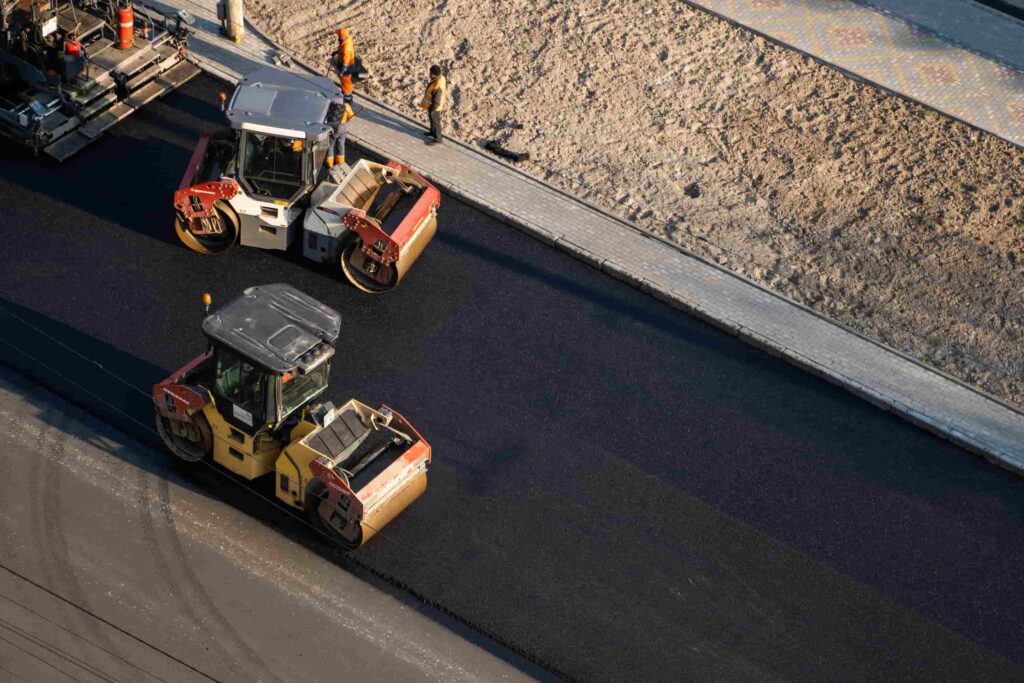
How Polyester Fiber Improves Key Asphalt Pavement Properties
1. Improved High-Temperature Rutting Resistance
At high temperatures, asphalt binder softens and aggregates may shift under traffic loads.
Dispersed polyester fibers help to:
- Increase overall mixture stability
- Restrict aggregate movement
- Reduce permanent deformation
As a result, asphalt concrete with polyester fiber shows better resistance to rutting.
2. Enhanced Low-Temperature Crack Resistance
In cold conditions, asphalt concrete tends to shrink and crack.
Polyester fibers act as micro-bridges within the mixture:
- Delaying crack initiation
- Reducing stress concentration
- Improving deformation tolerance
This leads to improved low-temperature cracking performance.
3. Better Fatigue Performance
Traffic loads are repetitive and cumulative. Fatigue resistance is critical to pavement life.
Fiber reinforcement can:
- Delay the formation of microcracks
- Slow down crack propagation
- Reduce the risk of sudden failure
Fiber-reinforced asphalt mixtures generally show longer service life and better durability.
4. Improved Moisture Resistance
Water damage is a common cause of asphalt pavement deterioration.
Polyester fiber helps by:
- Strengthening the internal asphalt–aggregate structure
- Reducing the negative effects of moisture at interfaces
This contributes to better moisture stability and long-term performance.
Practical Use of Polyester Fiber in Asphalt Concrete
Polyester fiber has been widely applied in asphalt concrete for:
- Highways
- Urban roads
- Bridge decks
- Heavy-traffic pavements
When used with proper mix design and construction control, polyester fiber provides stable reinforcement, consistent performance, and reliable results in real engineering projects.
Final Words: Polyester Fiber Is Part of the Structure, Not Just an Additive
Polyester fiber is not simply an additive mixed into asphalt.
It becomes an active structural component within the asphalt concrete.
Proper use of polyester fiber helps to:
- Improve overall pavement performance
- Extend service life
- Reduce long-term maintenance costs
As performance requirements for asphalt pavements continue to rise, polyester fiber remains a practical and effective reinforcement solution for modern road engineering.


 EN
EN  AR
AR  ES
ES  FR
FR  RU
RU  PT
PT  ID
ID  JA
JA  TR
TR  KO
KO