
Cuando se habla de materiales, especialmente en ingeniería o fabricación, la palabra “fuerte” se dice mucho. Pero la resistencia no es sólo una cosa. Puede significar cuánta fuerza de tracción puede soportar un material, cuánto peso puede llevar, cómo se comporta bajo presión o cuánto dura en el tiempo.
Así que cuando alguien pregunta, “¿Es la fibra de carbono más resistente que el acero?”, la respuesta honesta es:
👉 Sí, fibra de carbono puede ser más resistente que el acero, sobre todo a la tracción, pero depende de cómo se mida la resistencia y de cómo se utilice el material.
En términos de resistencia a la tracción (la resistencia a la tracción de un material), la fibra de carbono está claramente por delante. La fibra de carbono suele tener una resistencia a la tracción de 3.500-7.000 MPa, mientras que el acero suele oscilar entre 400 a 2.600 MPa, según el grado.
Pero la resistencia no es el único factor. El peso, la durabilidad, el coste, la resistencia a la temperatura y la aplicación en el mundo real también son importantes. En este artículo, explicaremos todo en un lenguaje sencillo, compararemos la fibra de carbono y el acero y le ayudaremos a entender lo siguiente qué material es realmente “más resistente” para sus necesidades específicas.
¿Qué es la fibra de carbono?
Fibra de carbono no es un metal. Es un material compuesto, Se fabrica uniendo miles de filamentos de carbono ultrafinos mediante una resina (normalmente epoxi).
Cada hebra de fibra de carbono es increíblemente fina (del tamaño de un cabello humano), pero cuando se agrupan y se superponen correctamente, el resultado es un material muy resistente. excepcionalmente resistente y extremadamente ligero.
Propiedades clave de la fibra de carbono
He aquí por qué se presta tanta atención a la fibra de carbono:
Relación resistencia/peso muy elevada
Es fuerte sin ser pesado. Esa es su mayor ventaja.
Rendimiento personalizable
Los ingenieros pueden controlar la dirección de las fibras, el grosor de las capas y el tipo de resina para adaptar la resistencia exactamente donde se necesita.
Baja densidad
En 1,6 g/cm³, en comparación con el acero 7,8 g/cm³.
Resistencia a la corrosión
No se oxida ni corroe como el acero.
Baja dilatación térmica
No se dilata ni encoge mucho con los cambios de temperatura.
Dónde se utiliza habitualmente la fibra de carbono
Debido a estas propiedades, la fibra de carbono aparece en lugares donde el peso sí importa:
- Estructuras aeroespaciales y piezas de aviones
- Componentes de automoción (especialmente vehículos deportivos y eléctricos)
- Bicicletas, bicicletas de carreras y artículos deportivos
- Palas de aerogeneradores
- Refuerzo industrial y componentes estructurales
La fibra de carbono no es barata y no es perfecta, pero cuando la principal prioridad es la resistencia ligera, es difícil de superar.

¿Qué es el acero?
Acero es uno de los materiales más utilizados en la historia de la humanidad. Es un aleación de hierro y carbono, A veces se mezcla con otros elementos como cromo, níquel o manganeso para mejorar propiedades específicas.
Puede que el acero no suene tan emocionante como la fibra de carbono, pero hay una razón por la que está en todas partes.
Principales propiedades del acero
El acero destaca por diferentes motivos:
- Excelente resistencia general
- Muy buena resistencia a la compresión
- Gran durabilidad y resistencia
- Maneja muy bien el calor
- Fácil de moldear, soldar y mecanizar
- Altamente reciclable
El acero también es predecible. Los ingenieros saben exactamente cómo se comporta bajo tensión, lo que lo hace fiable para estructuras a gran escala.
Dónde se utiliza habitualmente el acero
El acero domina las industrias que necesitan rigidez, masa y estabilidad a largo plazo:
- Edificios y marcos de construcción
- Puentes e infraestructuras
- Maquinaria pesada y equipos industriales
- Automóviles, camiones, barcos y ferrocarriles
- Herramientas, electrodomésticos y bienes de consumo
Puede que el acero sea más pesado, pero es resistente, asequible y está probado.
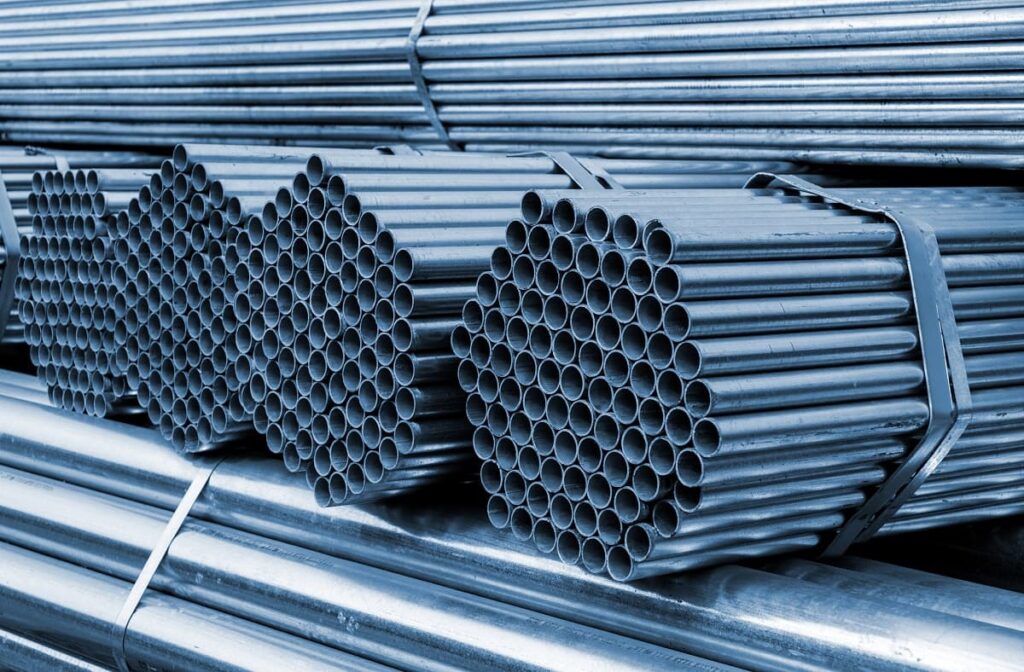
Fibra de carbono frente a acero: Principales diferencias
Antes de profundizar, veamos las grandes diferencias.
| Propiedad | Fibra de carbono | Acero |
|---|---|---|
| Enfoque de fuerza | Resistencia a la tracción por peso | Resistencia por volumen y compresión |
| Densidad | ~1,6 g/cm³ | ~7,8 g/cm³ |
| Resistencia a la corrosión | Excelente | Propenso a oxidarse |
| Resistencia al calor | Moderado (necesita revestimiento) | Excelente |
| Coste | Anticipo elevado | Bajo coste inicial |
| Fabricación | Complejo | Sencillo y maduro |
| Uso típico | Ligero y de alto rendimiento | Resistente, estructural |
Peso y densidad
La fibra de carbono es mucho más ligera que el acero. Su densidad es de aproximadamente 1.500-2.000 kg/m³, mientras que el acero se sienta alrededor 7.850 kg/m³-a través de cinco veces más pesado. Esta gran diferencia de peso se traduce en una mayor eficiencia de combustible, un manejo más sencillo, un menor consumo de energía y menos tensión en otras piezas. Por eso la fibra de carbono se utiliza tanto en la industria aeroespacial como en vehículos eléctricos y sistemas de energías renovables.
Durabilidad
La fibra de carbono no se oxida y resiste la humedad, los productos químicos y la sal. El acero puede corroerse si no se protege. Ambos materiales soportan bien la fatiga cuando se diseñan adecuadamente, pero el acero se comporta mejor ante impactos bruscos, ya que puede doblarse sin romperse. La fibra de carbono es fuerte pero más quebradiza y puede dañarse con impactos bruscos.
Coste
La fibra de carbono sigue siendo cara debido a los mayores costes de material y fabricación. El acero es barato, fácil de obtener y rápido de producir a gran escala, por lo que domina la construcción y las infraestructuras. En usos de alto rendimiento, sin embargo, la fibra de carbono puede ser rentable con el tiempo gracias al ahorro de peso y al bajo mantenimiento.
Impacto medioambiental
El acero es muy reciclable con sistemas de reciclaje maduros, aunque su producción consume mucha energía. Las piezas de fibra de carbono ahorran energía durante su uso y duran mucho tiempo, pero su reciclaje es más difícil, aunque mejora constantemente.
Resistencia a la tracción: ¿Qué significa realmente “más fuerte”?
Cuando la gente dice “la fibra de carbono es más fuerte que el acero”, normalmente están hablando de resistencia a la tracción.
¿Qué es la resistencia a la tracción?
La resistencia a la tracción es fuerza de tracción que puede soportar un material antes de romperse.
Piensa en estirar una cuerda. Cuanto más tiras, más cerca está de romperse. La resistencia a la tracción indica cuánta fuerza puede soportar.
Fibra de carbono frente a acero (resistencia a la tracción)
- Fibra de carbono: ~3.500-7.000 MPa
- Acero: ~400-2.600 MPa
Así que sí... la fibra de carbono soporta más fuerza de tracción que el acero.
Pero aquí está la verdadera ventaja: la fibra de carbono hace esto siendo mucho más ligero.
Por eso la fibra de carbono es tan popular en aeronaves y vehículos de alto rendimiento. Se obtiene una enorme resistencia sin tener que soportar un peso extra.
Aplicaciones: Elegir la herramienta adecuada
Elija la fibra de carbono cuando:
- La reducción de peso es fundamental
- Se necesita una gran resistencia a la tracción
- La resistencia a la corrosión es importante
- El rendimiento es más importante que el coste
Elija el acero cuando:
- La resistencia a la compresión y al impacto es importante
- El presupuesto es limitado
- Se requiere una alta resistencia al calor
- Se necesita apoyo estructural a gran escala
Por eso la ingeniería moderna suele utiliza tanto.
Conclusión: Entonces... ¿Es la fibra de carbono más fuerte que el acero?
Sí. la fibra de carbono es más resistente a la tracción que el acero, y mucho más ligero al mismo tiempo. Eso lo hace increíblemente potente para las aplicaciones adecuadas.
Pero el acero sigue siendo imbatible en muchos aspectos: compresión, resistencia al impacto, tolerancia al calor, coste y reciclabilidad.
La verdadera conclusión es la siguiente: El material “más resistente” depende de cómo definas la resistencia y de dónde pienses utilizarlo.
La selección inteligente de materiales no consiste en elegir uno en lugar de otro, sino en conocer sus puntos fuertes y utilizar cada uno donde tenga más sentido.
Si se trata de construir algo que debe ser ligero, eficiente y de alto rendimiento, es difícil ignorar la fibra de carbono. Si necesita resistencia, estabilidad y asequibilidad a gran escala, el acero sigue siendo el rey.
Y por eso ambos materiales seguirán dando forma a nuestro mundo, uno al lado del otro.


